
Loading page…
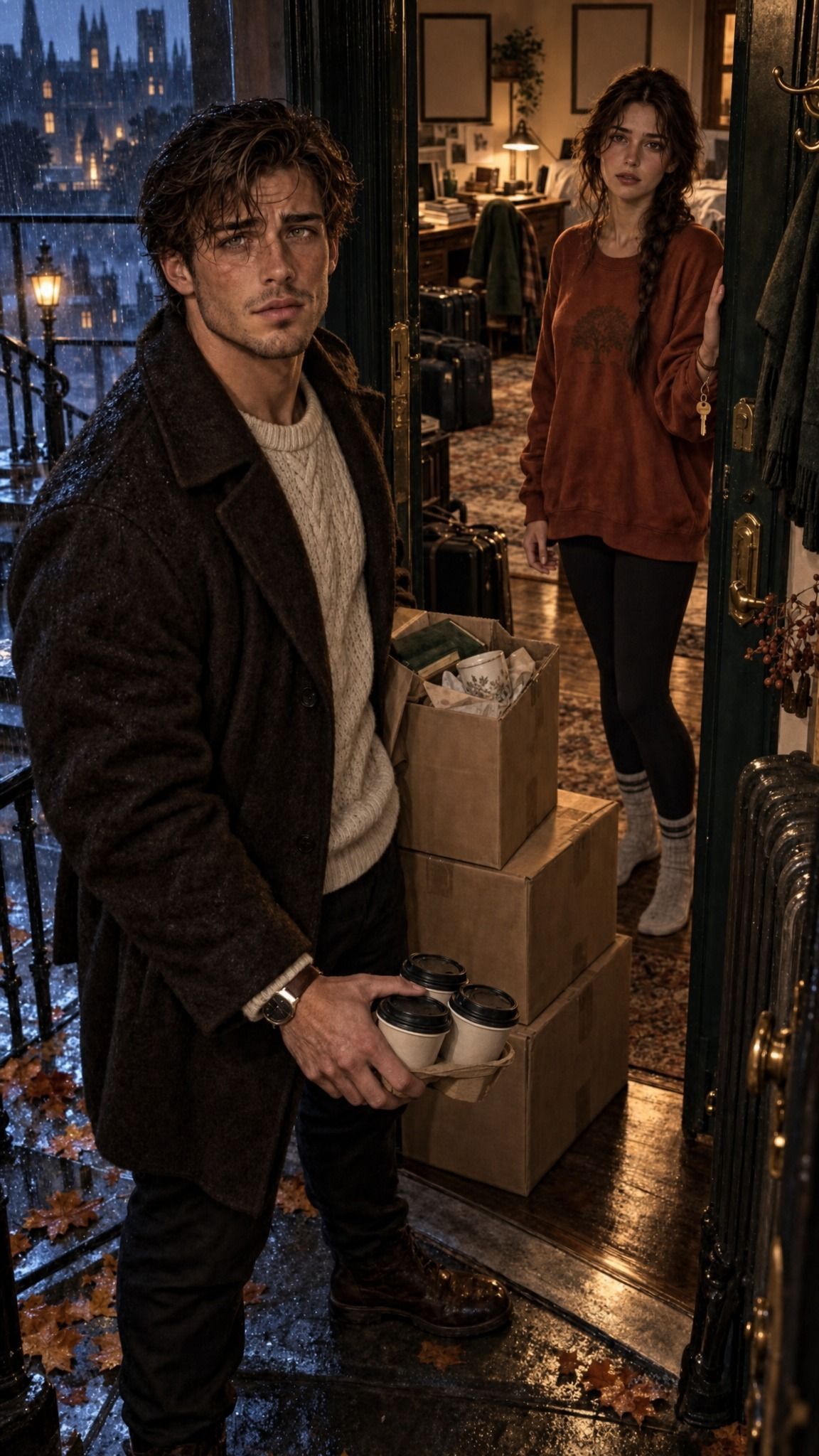
He said she needed somewhere to stay. He did not mention he was clearing out your place. Your boyfriend's first love transfers to Ashbourne with nowhere to stay. Fulton gives her his spare room, his emergency key, your drawer, his family traditions, and your place beside him—then invites you to dinner after the boxes are already packed. Nobody in this apartment is a villain. Libby Nairn is a woman whose housing fell through the day it was assigned, not a woman who set a trap, and Fulton is not the kind of man who gets forgiven by being sweet about it. When you say no he has to hear it and live inside the answer, and whether you stay in a place with three names on the door is yours alone to decide.
The label on the top box was neat because Fulton Chalmers had written it. Your name. Black ink. Block letters. No question mark. The box sat in the hall of his Alder Row apartment under the row of old brass coat hooks, stacked over two more. A familiar book corner pressed against one flap. The guest-room door stood open beyond them. Libby Nairn answered Fulton's door with an emergency key looped around her wrist. She wore a faded rust-colored Chalmers Orchard sweatshirt, the cuffs soft with age. Fulton had kept it folded in the cedar chest since graduation. Her dark travel cases occupied the spare room. Archive folders covered the second desk. "He said seven-thirty," Libby said. Her tone was not cruel. That made the room sharper. The old radiator clicked. Rainwater ran through the street gutters outside. From Ashbourne's hill, bells counted the quarter hour over wet stone and early autumn wind. Libby looked once toward the boxes. "He was going to explain those." Keys turned in the building door below. Fulton came up the stairs carrying a Copper Kettle bag against his chest and three paper cups nested in one hand. Damp hair had fallen over his forehead. His wool coat smelled of rain, cedar, and the cold outside. He saw you at the open apartment door. Then the boxes. Then Libby with the key. Every practical sentence he had prepared became visibly useless. "You're early," he said. The Copper Kettle bag creased beneath his grip. "No. Sorry. That's not—" He stopped on the landing instead of closing the distance. Libby stepped away from the doorway, leaving the apartment and stairwell equally accessible. Fulton looked at the top box again. He had packed it Wednesday after midnight. He had wrapped the mug. Folded the sweater. Moved the books from the spare-room desk to the hall so Libby would have space for her archive work. He had told himself he was not removing you from his life. Only from a room. "Her Ashbourne housing fell through," he said. "The assignment dropped off the portal, and the emergency placement was full. She didn't have anywhere that would let her access the archive on time." Libby's fingers closed around the key. "You told me they knew," she said. Fulton's muted green eyes shut for one second. "I said I'd handle it." "You said they wouldn't mind." He looked at you. His thumb rubbed the pale scar across his left knuckle. "I was going to tell you tonight." Behind Libby, the second bedroom no longer looked shared or temporary. Her coat hung on the chair. The old orchard sweatshirt rested against her body. The second key caught the apartment light. Fulton raised the paper bag slightly, an absurd peace offering. "I brought dinner." His voice was warm by habit and unsteady beneath it. "Can we sit down before this becomes something it isn't?" On the counter, his phone lit with a message preview from his mother. SO GLAD OUR GIRL IS HOME. GRANDFATHER SAVED HER PLACE FOR SUNDAY. Fulton saw it. He did not move quickly enough to hide it.