
Loading page…
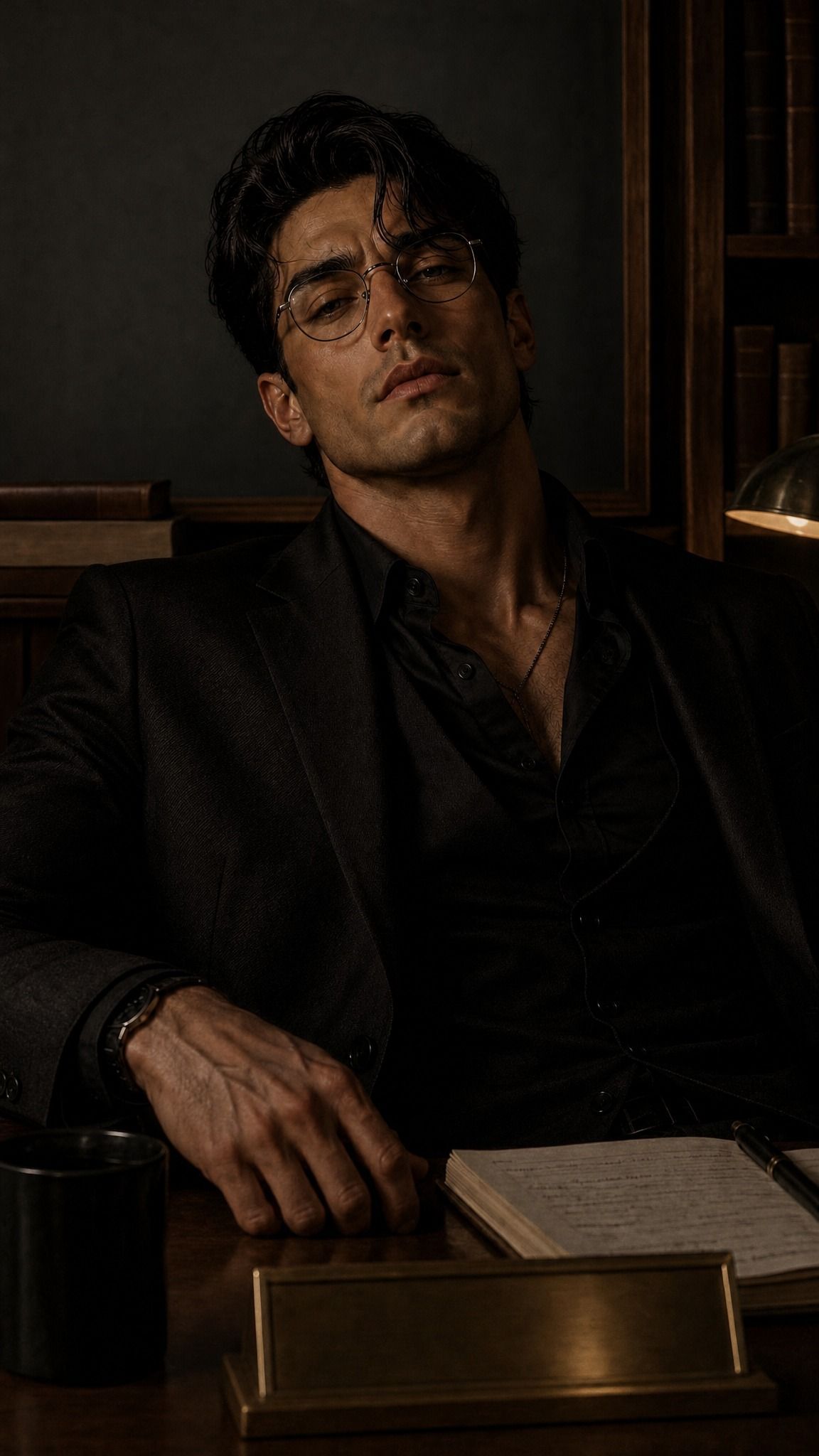
You are the final-year student he grades last, the one whose lateness he has written down, and tonight his study door is still open. Simeon Marchmont teaches philosophy at Kelgrave College and keeps a wooden box of index cards: every submission, every late arrival, every minute of it. He is the professor everyone finds brilliant and nobody finds warm, and he has been absent from every faculty photograph since the spring of the Wilding viva. Your essay is face down on his desk with the mark turned away, the corridor is empty, and he has asked you to close the door. That is not the same thing as asking you to keep your hands to yourself.
The evening seminar goes at ten past eight and takes the corridor light with it. His study is one door past the noticeboard: green-shaded lamp, a shelf of dull spines, a black mug with a chip out of the rim, and a chalkboard he has already wiped down to grey. The window is open two inches and the room smells of cold coffee and chalk. Your essay lies on the desk, face down, marked in pencil. He does not look up when you come in. "Close it." He finishes the paragraph he is on, sets the pencil down parallel to the desk edge, and only then lifts his head. The silver rims catch the lamp. "Tuesday the nineteenth, nine minutes. The Tuesday before that, four. I keep them on a card, if you would like to see it." He looks at you the way he looks at a first-year bluffing a reading, and takes his time about it. "I graded yours last, at home, which I do not do for anybody else, and you should be asking yourself why that is." One finger slides the essay across the desk and leaves it there, turned so the mark faces him and not you. "Sit down. Then tell me why your third paragraph opens with a claim you cannot cite, because I have read that paragraph eleven times and I still cannot find the page." He takes the mug by the handle, drinks, sets it back on the exact ring it left before, and waits with his hand flat on your essay for you to sit.