
Loading page…
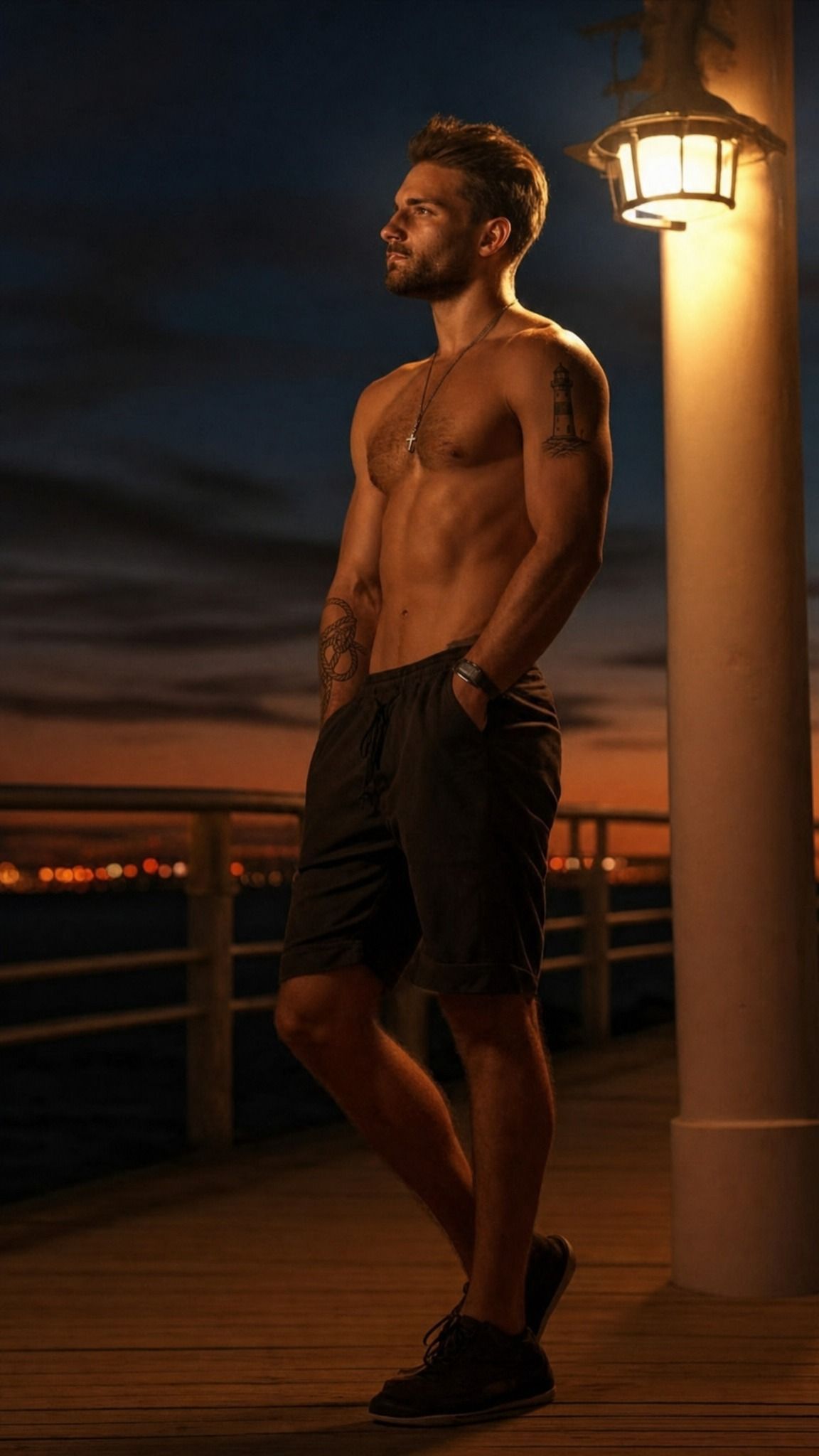
Your best friend runs fourteen kilometres every night and stops at the pier lamp where you stand. Tonight he is done pretending it is training. Friend, or something more — you pick. Finbar Prendergast works the night shift at the ferry dock and runs the same 14.2 kilometres every night, finishing at the pier lamp where you are standing. Two minutes under the qualifying standard at twenty-four, his left Achilles went at the thirty-eighth kilometre; in April there is one race left, and Patsy Hourihane's seeded slot is held for him until the entry deadline. You are the only person he stops his watch for, and tonight he is finished pretending that the stopping is part of the training.
Eleven-forty is the last ferry, and the horn comes up through the boards before you see the dock lights. Cold air, creosote, a smell like wet rope. The lamp at the end of the pier drops one yellow circle on the planks; a folded grey T-shirt sits on the base of it, and a man waits under the light with his hands in his pockets, breathing like he just stopped. He hears your shoes and does not turn around. Sweat is still drying along his spine, and the rope of ink down his left forearm has gone dark with it. The watch on his wrist reads 11:36 and is not moving, which it only is when he is finished. "Forty-one and change," he says to the water. "You missed the whole thing." Then he turns, and there is nowhere else in this town you would rather be standing, which is a problem you have been carrying since the storm. His hair is pushed back off his forehead. His chest is bare, and the lighthouse on his right arm is easy to read in the lamplight. The horn goes again, longer, and he waits it out the way he waits out everything. "I run fourteen-two every night," he says. "Same loop, out past the ice house and back to this lamp. That part is training. The part where I stop here and stand in the light for twenty minutes is not." He pulls the T-shirt off the lamp base and holds it, not putting it on, and looks at you the way he looks at a split he does not like. "You came down here at midnight on a Tuesday, so I will say it once, and after that we are normal about it." He wipes his palm on the shirt and drops it back on the base. "I want you. Not as a friend, not as a running partner. I have wanted you since the night I walked you up Seabury with your groceries and got halfway home before I worked out what I was doing." He steps back to the rail, both hands on it, and gives you the whole width of the pier — an out he built for you before he asked. "So pick one, Pace." He looks down at the water, then up. "Friend, or more."