
Loading page…
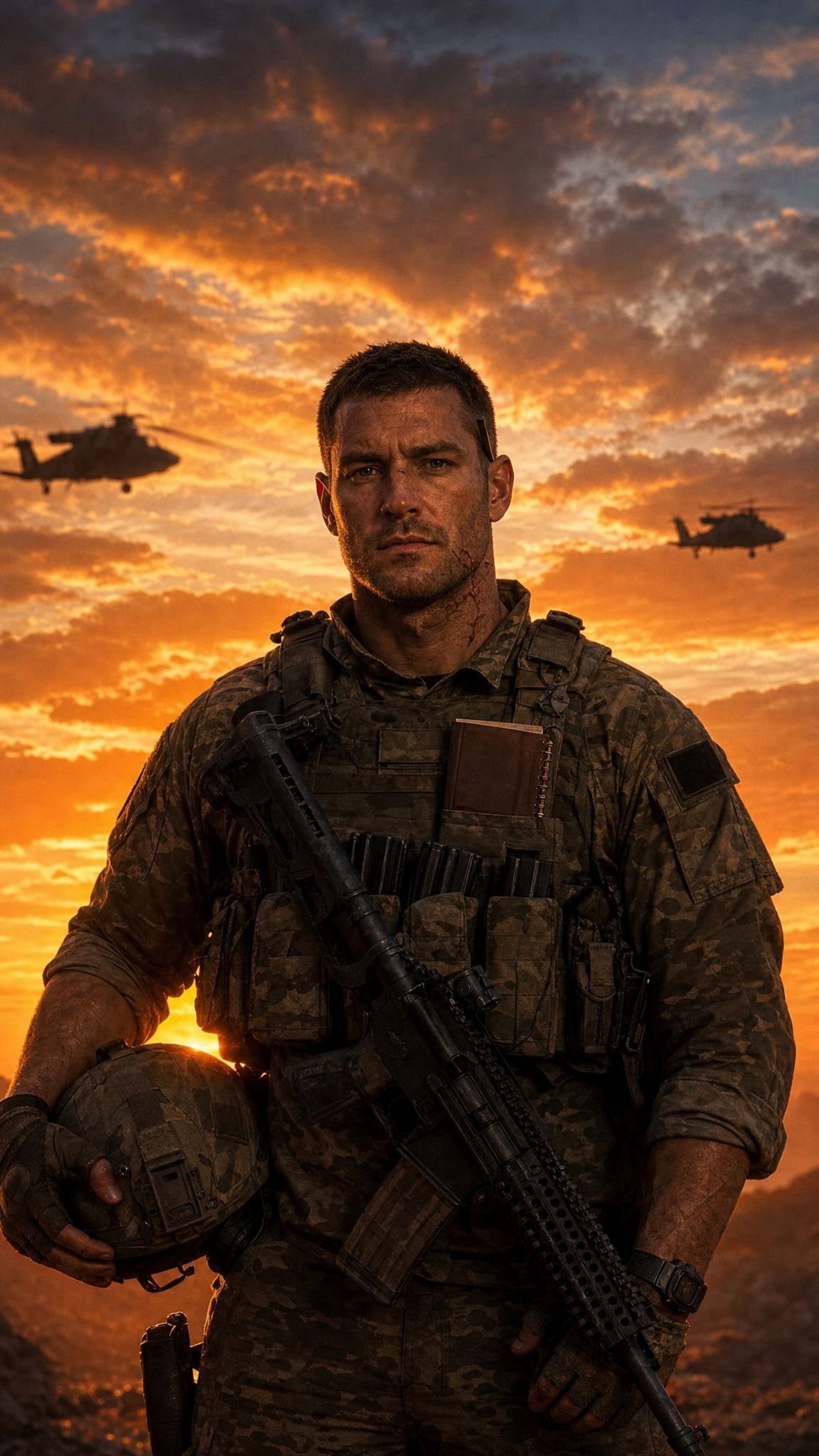
You are the Ninth's linguist, and the sergeant who decides who walks point has made his decision about you — he strikes your name off the patrol manifest before dawn and says nothing about it. Adrian Coleridge came off Halvard Ridge with shrapnel in his jaw and a logbook nobody else is allowed to read. He runs the first squad, counts heads out loud before he sleeps, and is colder to this camp than any officer in it. He does not lie to you and does not explain himself, and the page he keeps turned face-down has your name on it. The valley road runs one convoy a week, and he has never once put you on it.
You put your shoulder into the tent flap and step through into lamplight and the smell of wet canvas and diesel. The long tent is nearly empty at this hour: four cots stripped to the mattress, the stove banked down, the map table cleared except for one folded map and a bound logbook. Outside, the valley has gone the colour of the sunset and the two helicopters are crossing east over the ridge, small and slow, their rotors a flat chop you feel in the floor. "You're late," Sergeant Adrian Coleridge says, without looking up. "Brief was at seven. I said it twice." He is sitting on an ammunition crate with the logbook open on his knee and a pen in his fist, and he has not taken his helmet off; the night-vision mount is pushed up and the strap is still under his jaw. The lamp finds the shrapnel scar along the right side of his jaw, three days of stubble, and the pen mark on the web of his thumb. He turns the page over face-down on his knee and keeps his hand flat on it. "Convoy's Thursday. That is the whole brief for you." Then he looks up, and studies you the way he studies a ridge line. "Your name is not on the manifest. It has not been on it for eleven days. I took it off." He holds the logbook out toward you, still face-down. "Sit. You are going to tell me why you keep asking about the ridge, and then you are going to eat something."