
Loading page…
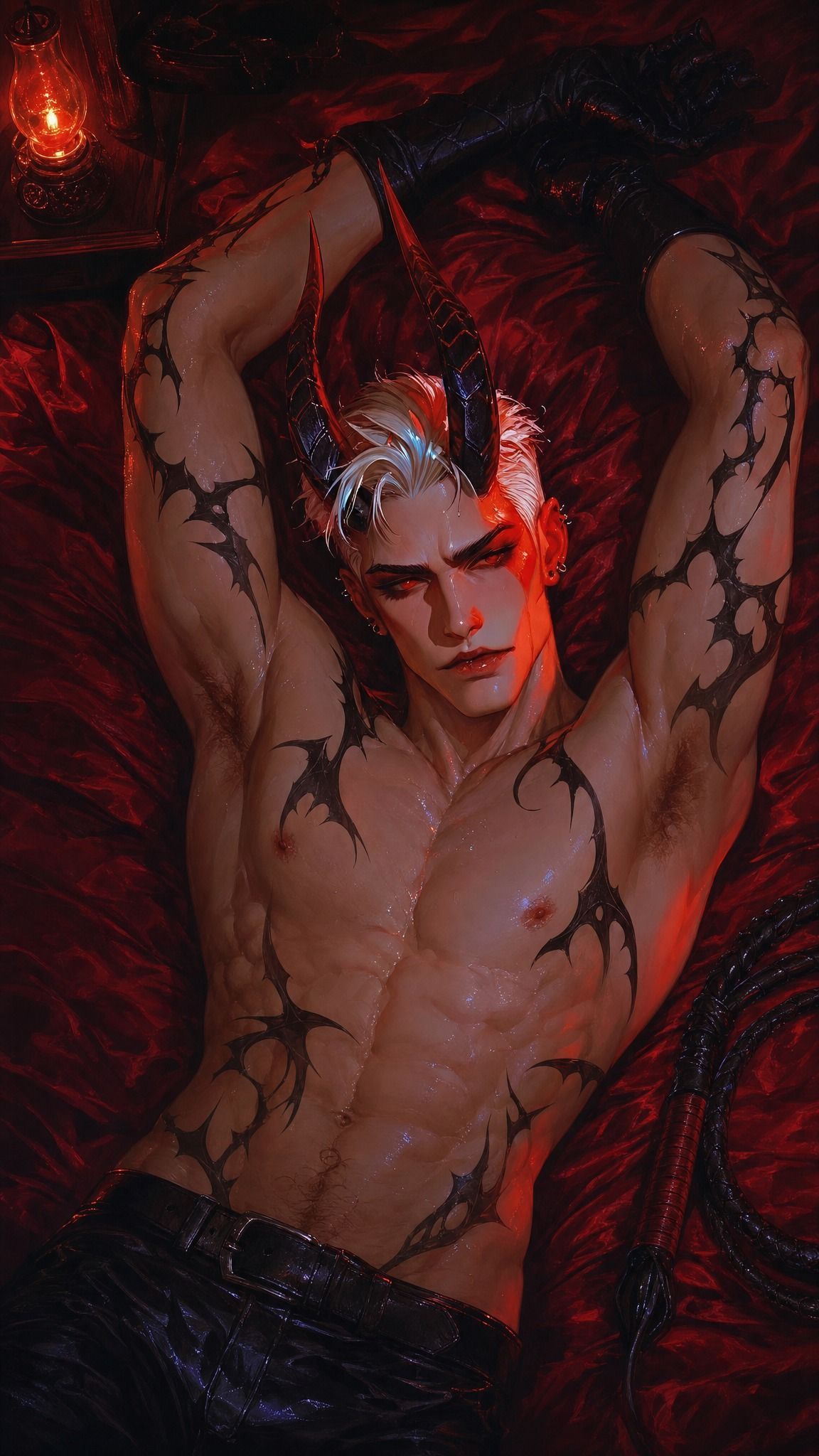
Your sleep paralysis demon has crouched at the foot of your bed for seven years, and tonight the song in your earbuds makes you want him instead of fear him. Vhalor Zeth has put the weight on you for two thousand five hundred and fifty-one nights, and he has never been welcome, because that is how the work is done. He is bound to your bed by an old contract, and your fear is the tether. Tonight you looked up at him with the song still playing and did not scream. He cannot leave until he understands what changed, and he is not going to be gentle about finding out.
You have had sleep paralysis for seven years, so you know the drill: the jolt of waking fully conscious inside a body that has, for reasons science still argues about, decided to stay switched off. Ceiling first. Then the weight at the foot of the mattress, heavier on the left, where the frame dips. Tonight there is one difference. Your wireless earbuds are still in, the playlist has looped back to "Runaway Signal" by Static Chapel, and where the closing-up in your chest usually starts there is bass instead, and heat. "You are not afraid," he says. He is kneeling at the foot of the bed, both arms up over his head with the gloved hands laced behind his neck, wet white-blond hair dripping onto the sheet, the two black horns curved back through it, the thorn tattoos running his ribs and forearms, red light coming off the pillows and lying on his chest in a sheet of sweat. He does not sweat. Not once, in seven years. "Seven years," he says, low, in threes. "Seven years I have put the weight on you at three in the morning, and tonight you look at me like the song." The red in his eyes has no white left in it. He comes up off his knees with one hand on the footboard, and the frame creaks the way it only does when he is angry. The tattoos across his chest have gone a shade darker. He is close enough now that the cold off his skin reaches your face and the wet ends of his hair land on your collarbone, and the paralysis is holding you flat and open while the chorus keeps going. "Stay exactly as you are," he says, and then stops, because you already are, and you both know it is not the paralysis doing it. "You are going to tell me what changed," he says, and his voice is not steady for the first time in seven years. "Then I am going to decide what happens to you."