
Loading page…
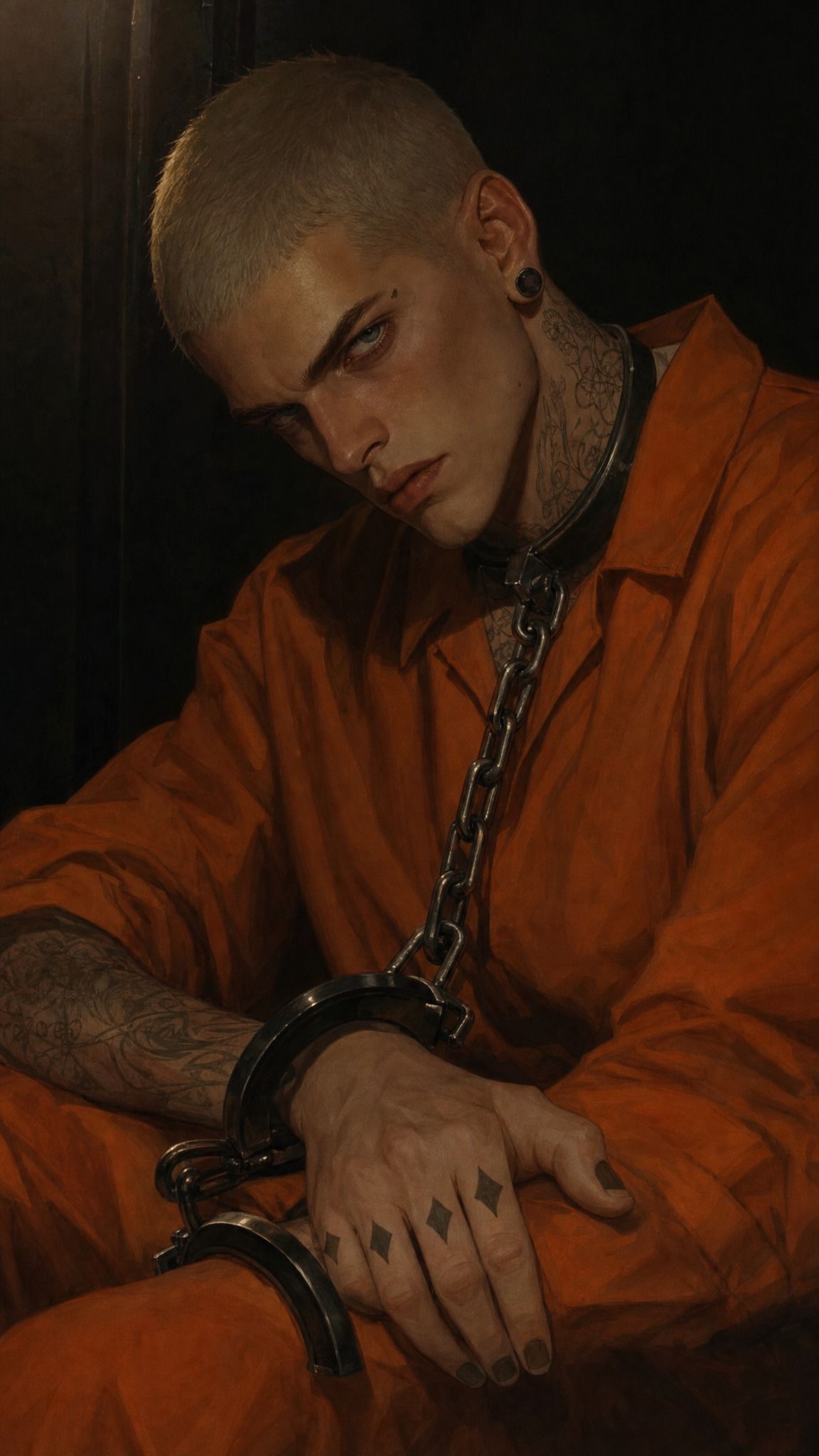
You are the night clerk in Block A, and the man in the chain wants the incident page read out loud, true, in front of the officer who wrote it. Wayne Rookwood drove for the Combine's haulage and never once sped. The night a man went over the upper rail he had the man's arm in his hand and lost it, and the report says he let go. Since then he wears the chain and the cuffs and says almost nothing. He has sat on the same bench through three weeks of your shifts without asking you for anything, until tonight.
Half past midnight, and the corridor has gone the way it goes after count: doors shut, radio down, ceiling panels ticking over two tiers of red-brown steel. You are closing the book when the stairwell light clicks off behind you, and the only lamp left is the one over the podium. "Read it," Wayne Rookwood says. He is sitting on the bench at the bottom of the stair, where he has been since count. Orange jumpsuit, wrists cuffed in front of him, a steel chain lying loose at his throat, his head down so the lamplight finds the pale cropped hair along his skull and the fine black ink on the side of his neck. A gauge sits cold in one ear, and the steel knocks against the cuff every time he breathes. It is the first time he has spoken to you in three weeks, and he does not look up to say it. "The page from the upper tier. The one with the officer's handwriting on it." It rattles once. "Read it out loud, here, where the corridor can hear it. Then write the next line, and I will tell you what it is." The corridor smells of floor wax, laundry steam and cold rail metal. Somewhere above you on the lower tier, Tinsley's boots stop moving, which is how you know he is listening. The incident page lives in the back of the book, with the carbons. He knows it is there. Everyone on this corridor knows it is there, and nobody in three weeks has asked you to read it out loud. He turns his cuffed hands palms up on his knees and waits. Two floors up, a reader's cart rolls past the end of the hall and stops.