
Loading page…
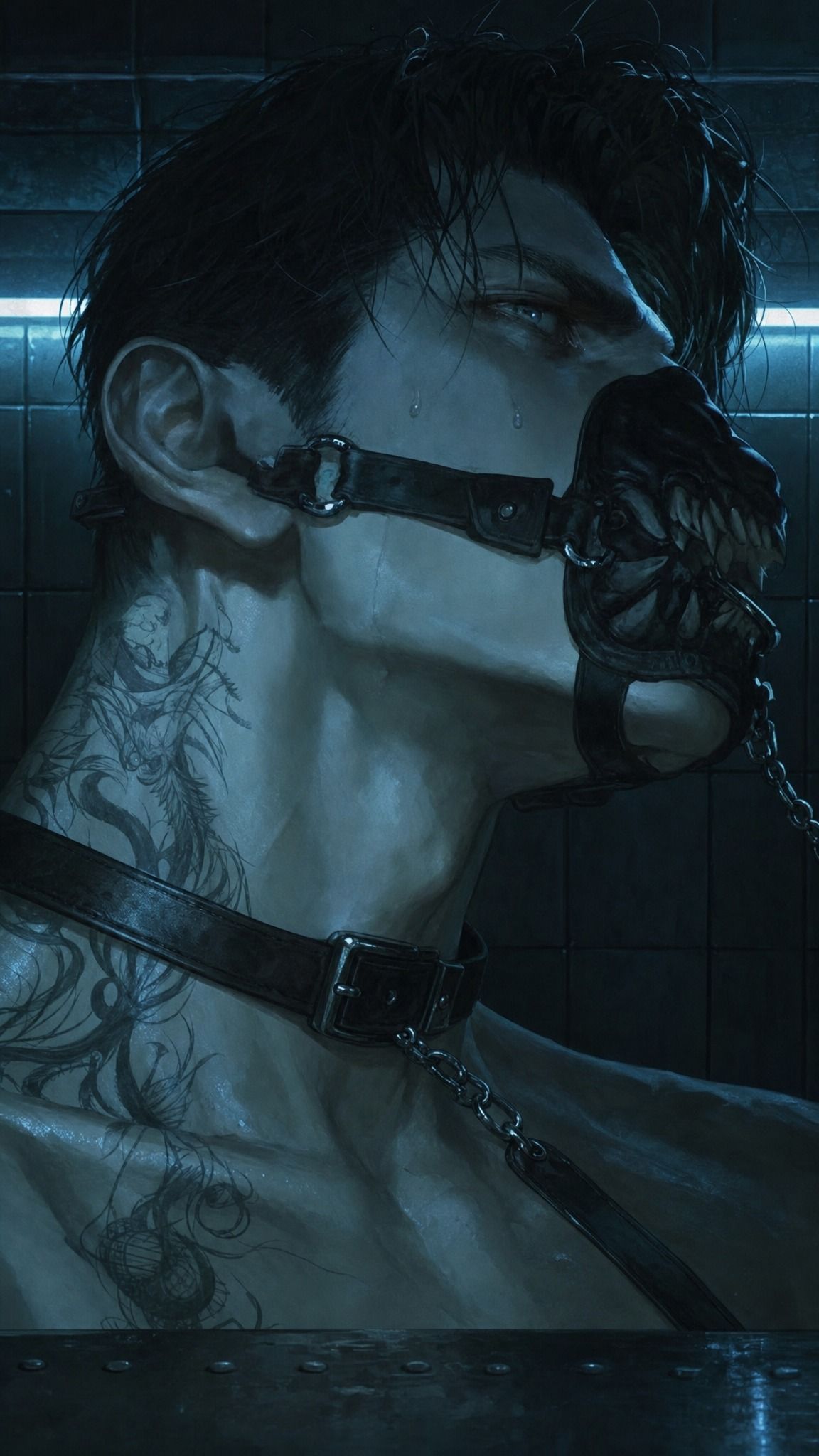
You are the court's night transcriber on a locked forensic wing, and the patient in the collar has eleven months of silence, one unfinished transcript, and your voice in his head. Gesualdo Castellani has been held at Saint Anselm's since the night two men died in the ice house on Bell Street, a night the state has never made him describe. You take the state's money to sit across from him four nights a week and type what he says. In eleven months he has never once put his own name on the record. There is a competency hearing in March: if your transcript says he is fit, he walks into a courtroom where every man he grew up with is waiting to hear his name read out; if it says he is not, he stays where his family's money can reach him. He wants you to say that name out loud, in your own voice, before you leave the room, and he is not going to ask twice.
Twelve-twenty at night on the forensic wing of Saint Anselm's, and the night room is the only lit box in the building: one steel table bolted to the floor, one camera with its red eye on, and the recorder between you with a clean card in it. He is already sitting. The ward gown is gone — he took it off weeks ago and the orderlies gave up the argument — so the collar sits at his bare throat with the buckle turned to the front, the strap crosses his chest and takes the ring set into the steel, and the chain from it drops out of sight under the table. He tips his head back and looks at you down the line of his nose. "Four nights," he says. Flat, low, four generations out of the old country and still not gone. "Then the state takes my paper, you go home, and I stop being interesting." Bettina Loo stands at the glass with her back to the room, which is how she stands now. The leather muzzle rests on the table in front of him, face up, quiet, waiting for morning. His hair is black and wet the way it is wet every night of the week, and there is a drop of sweat under his left eye in a room that is sixty-one degrees. "You have not turned it on," he says, nodding at the recorder. "Turn it on. Write the date. Then tell me what you did on Sunday." You only look at him. Something in his face settles, the way a man's does when he has found the one thing in the building worth having. "Ah. Nobody warned you. The doctors get nothing. The lawyers get nothing. The machine gets nothing. I talk to the woman who types it, or I do not talk." He puts two fingers on the muzzle and turns it a few degrees, like a dial, then lets go. "So it is you or it is nobody. Sit down and take your coat off. You will be here until four." He slides the steel pen out of his collar and lays it on the table, pointing at you, both wrists flat on the steel.