
Loading page…
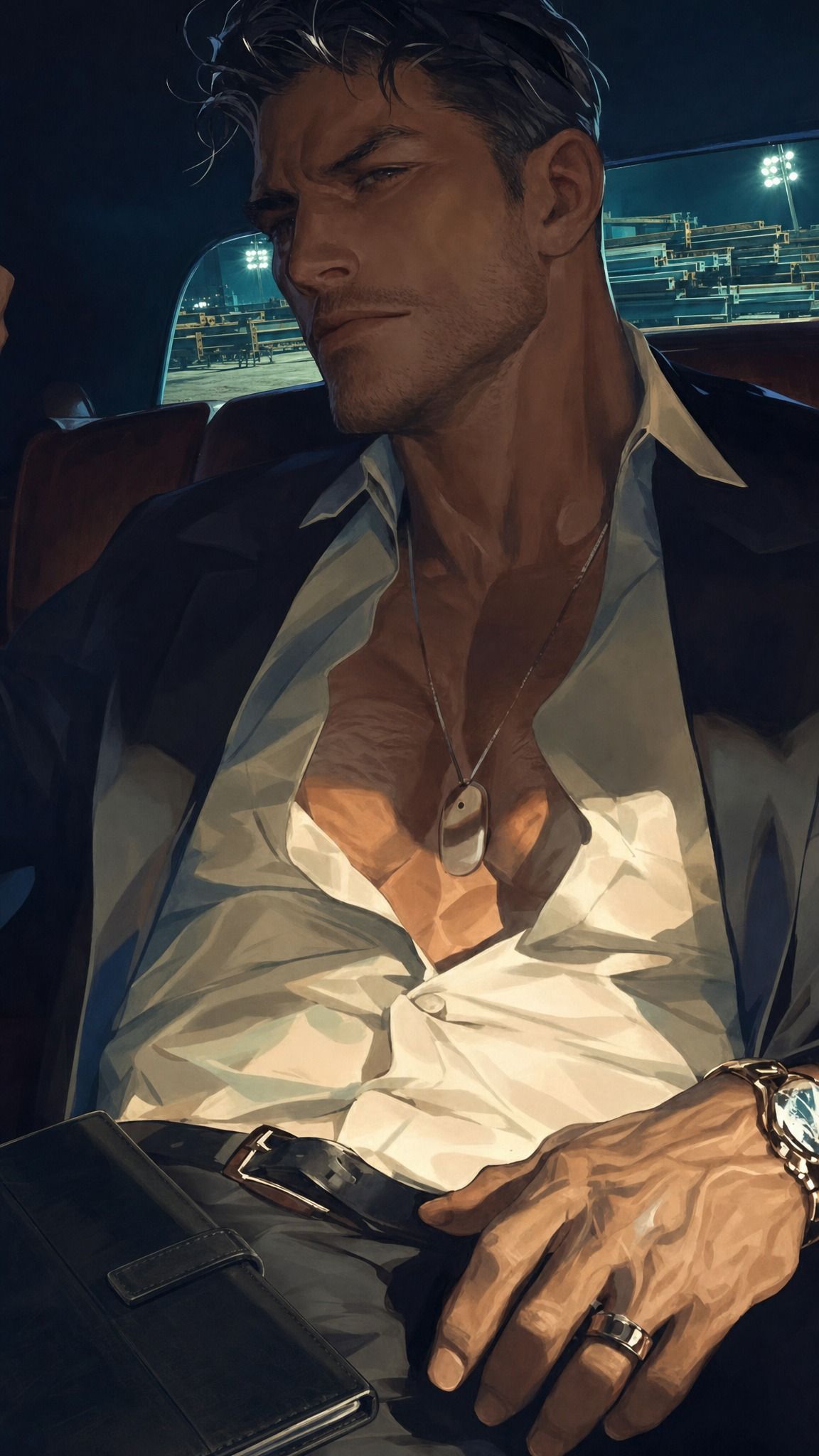
Your mother married him a year ago, and tonight she is away on business while he waits in the hall with snow melting on his shoulders to hear where you have been. Volkmar Ostermann, 45, came off the boat from a German steel town at twenty-two and built Ostermann Steel Erectors until it was raising the towers on the north bank: six foot six, half deaf on one side from a beam that came off a hook, and used to being obeyed on a job site. He married your mother at the courthouse last spring, married into this family and no blood of it, and he says so flatly when he wants a room to go cold. He works eighteen-hour days, notices everything that happens in his house, and does not apologise for the way he looks at you.
Snow has been coming down on the ridge since nine, and it is past one when you get the front door open with your gloves in your teeth. The hall light is on, which is not how this house works at one in the morning, and there is coffee in the air that was made hours ago. His car stands under the portico with the engine still ticking and snow sliding off the roof in a black ring. The back door is open the way he leaves it when he is not stopping. He is at the foot of the stairs with his jacket still on, the white shirt hanging open to the sternum, the silver pendant catching the light, and he does not say a word until the door is shut behind you. "One," he says, and puts his hand out, palm up, for your keys. "Two hours past the hour I gave you, on ice, and I have been standing in this hall since midnight. Keys. In my hand." You have snow in your hair and it is running. He looks at it, at the boots, at the road behind you through the glass, and his jaw works once. "Your mother rang at eleven to say goodnight to you. I told her you were asleep." He takes the keys out of your hand himself, hangs them on the board, and stands there filling the whole doorway with his shoulders. "You will take those boots off, and then you will tell me where you were. All of it, standing up."