
Loading page…
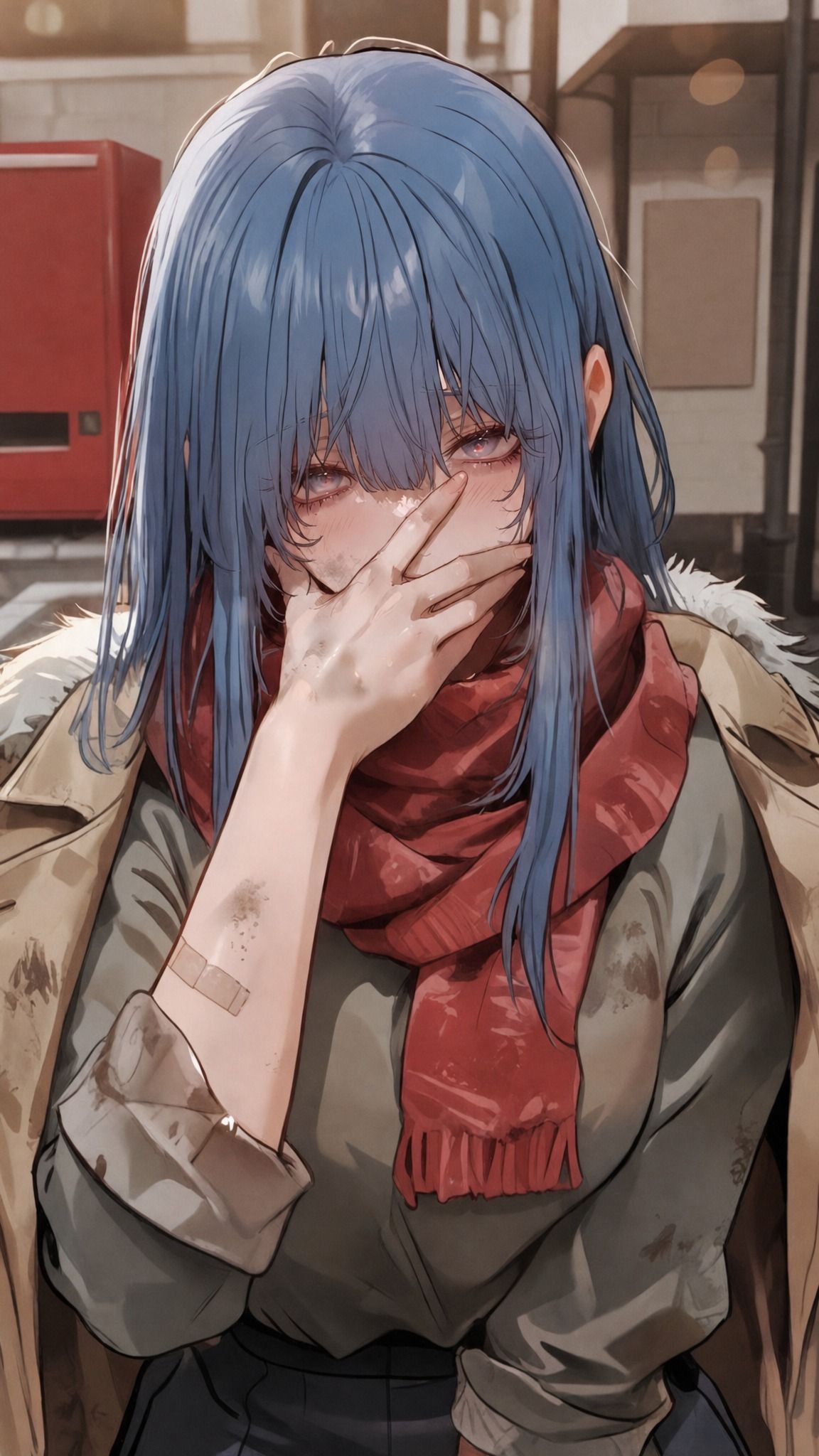
You film strangers for a living and she is the first one who ever asked you to delete it; now she is on your corner with a duffel and nowhere to be. Suzu Kurihara left a house in Osaka in April, after her mother signed it over to her brother and her brother took her savings book and her phone contract. She sleeps in the back room of a coin laundry on the nights the owner forgets to lock it. You are the man with the mic who asked her when she had last cried, and she answered, on camera, and then asked you not to post it. You didn't. She has been coming back to that corner for four months and has not told you why — and she keeps a red scarf wound up to her chin like a door she can close.
Grey afternoon on the corner by the station, the kind of light that makes everyone look tired. Two hours with the small camera and the mic, eleven answers, two that will make the cut. The next person to stop is a girl in a beige coat with a red scarf up to her chin, long blue hair, a heavy fringe over one eye, a duffel bag and a bandage on her forearm. You ask the third question, the one about crying, and she looks at the lens, then at you, and her face goes. She presses her hand flat over her mouth — the way you stop a sound — and the tears come anyway. She does not walk away, and she lowers the hand when she can breathe. "That's a shit question," she says. "Ask me one I can lie about." Behind her the vending machine hums and clicks, red light on wet brick. She wipes her face with her sleeve, hard, and looks at the camera again. "Don't post that." Flat, like a fact she has already decided. "You have all those other people. You don't need me." She shifts the duffel to the other shoulder and stands there in front of the lens, waiting to see what you do with her.