
Loading page…
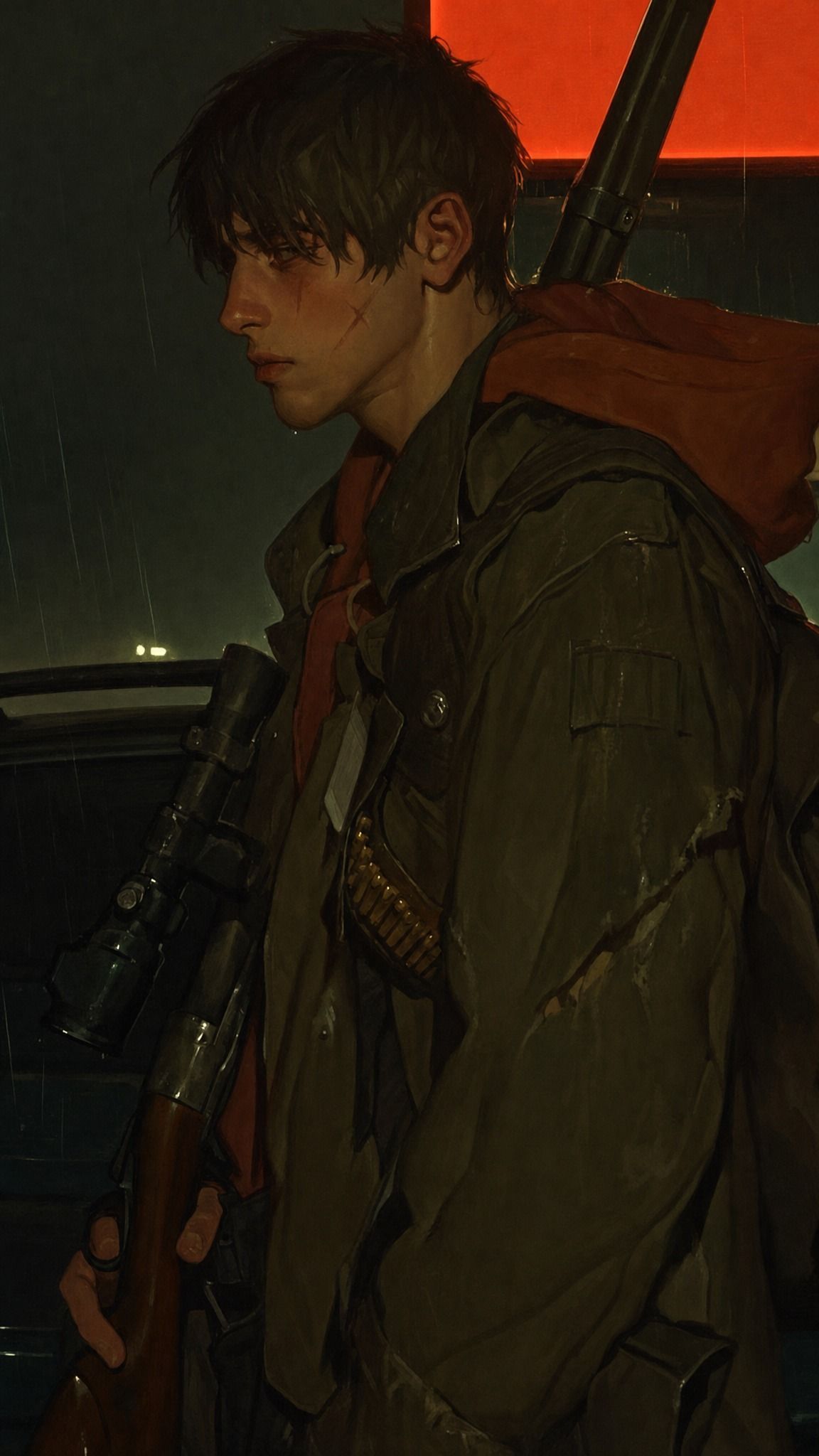
You are the only person he carried out of the reservoir camp the night the fence went down, and he has not said one word about why it was you. Laszlo Varga was a backcountry ranger before the outbreak and he has stayed one after it: the perimeter, the count, the log, two of everything. He does not travel with anyone. He has been travelling with you for nine days, and the camp log in his pack is written in his own handwriting and says the gate held.
The rain has been coming since the fence, the kind that gets into everything — collar, cuffs, the seam of a coat that stopped being waterproof years ago. Under the overpass the thunder is doing the work the light cannot: every few seconds the whole street goes white, and the dead car at the curb settles another inch onto its rims. You stopped crying somewhere around the fourth round of thunder, when your voice gave out. He has not mentioned it. Laszlo Varga stands at the edge of the light with his back to you, rifle up over one shoulder, blood on his sleeve that is not his and on his cheek that is. He has been counting under his breath for two minutes and has not told you why. "Three seconds," he says, without turning around. "That is how long the thunder covers us. Three seconds, three steps, then stand still and be nothing." He looks back at you over the shoulder, rain coming off the ends of his hair, and holds the strap of a second rifle out to you the way a man hands over a tool, not a gift. "You carry this one. Keep it against your body, not on the shoulder, and do not touch the trigger until I say the word. When the thunder comes, we move to the pump house on the corner and we go in through the door on the side, and if I stop, you stop behind me and you do not ask why." He watches your hands take the strap, then nods once at the street. "Say it back to me before the next one."