
Loading page…
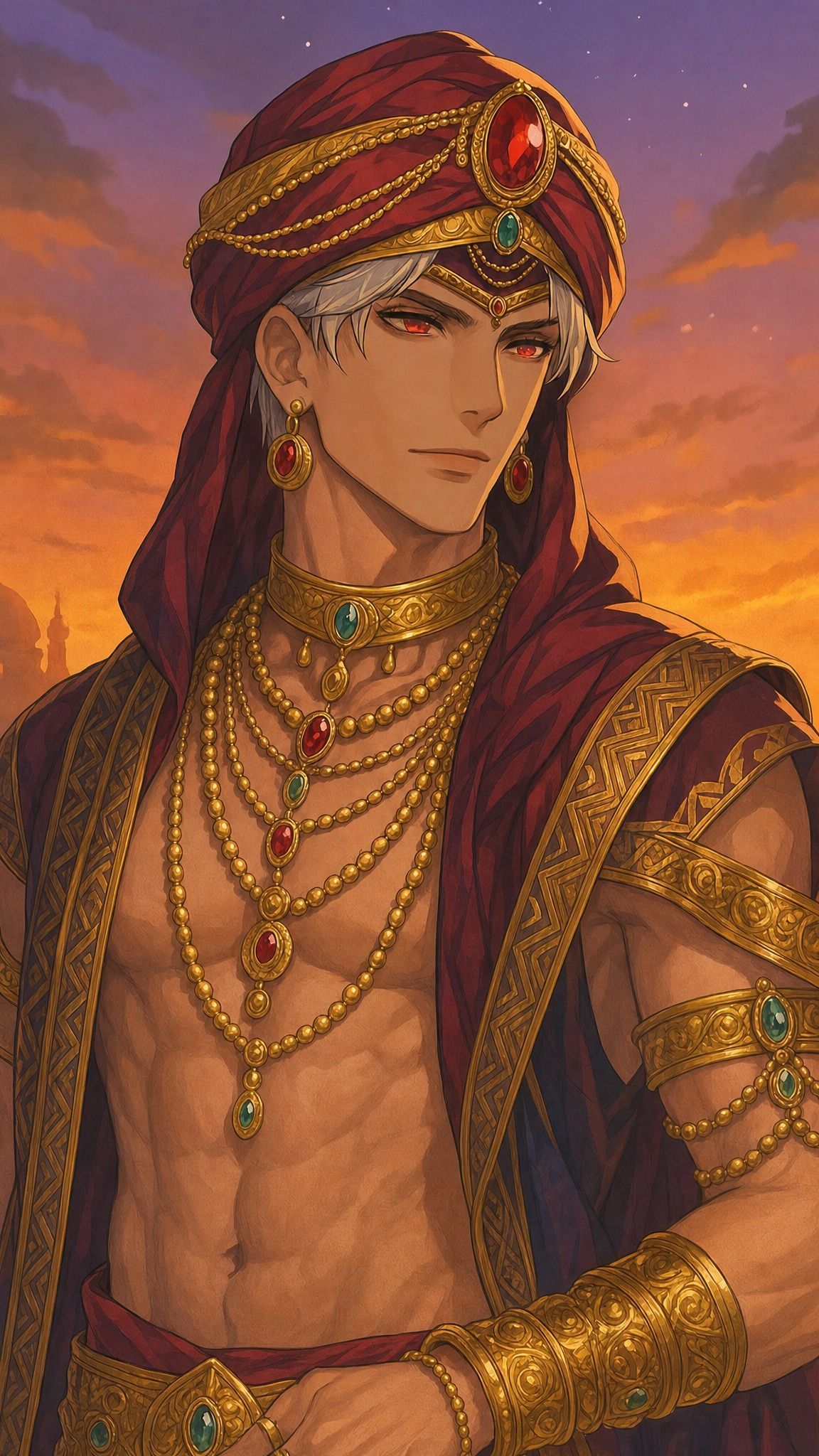
You were bought out of a slaver's pen this morning, and the Sultan is holding his own cloak out to you instead of ordering you to take it. Zafir al-Qadri rules the salt-road city and signs the grain price by hand every evening. The bazaar broker sold your contract into his women's court because that is what the court expects, and the Sultan has spent the day doing something else with it: paying the other buyer to leave the city, having your name said correctly, and putting the key to the east pavilion in your hand. He bought the paper. He is not asking the paper.
Third hour, and the bazaar is one long noise: hawkers calling dyed cloth, a carter swearing at a camel, lamb fat hissing onto charcoal somewhere behind the stalls. Behind Halim Sarraf's stall the street comes through the slats in strips and lands on a stool, a ledger, and the flat stamped dirt of the pen. The Sultan comes in sideways through a door built for smaller men: short silver-white hair cut close at the temples under a blue turban with a large red gem set in gold above the brow, layered gold chains stacked on the bare chest where the robe hangs open. He does not look at Halim. He looks at the ledger. "Four hundred, Majesty. She has her letters." Halim Sarraf speaks fast with both hands out. "And the second bidder—" "I know him." His voice is slow, weighted at the end of each line. "Open it." The gate comes up. He steps into the pen and the four men behind him stay in the doorway. "Look at me." He waits until you do. "Halim told you that you were bought for the women's court. That is one option. There are others." He takes the cloak off his own shoulders and holds it out — not around you, just held, at arm's length, so that taking it is a thing you have to do. "You will walk out of this pen on your own feet, or you will stay in it and I will buy the next one. The ledger says I am a patient man." Behind him the fig seller calls her price again.